

Getting through an ordinary Tuesday can take more effort than anyone sees. Low mood, restless nights, and exhaustion may linger even when you take your medication as prescribed. If depression still makes work and family life difficult, we want you to know that your treatment plan can be revisited.
Exomind may offer another option for some adults whose antidepressants have not provided enough relief. Continue reading as we explain what to review, how screening works, and where this treatment may fit alongside the care you already receive.
Your Next Steps
We approach persistent symptoms by looking at the whole picture. The following steps can help you discuss depression treatment options besides medication while keeping useful parts of your current care in place.
1. Review What Is Still Hard
We start by asking what has improved and what still gets in your way. Perhaps you cry less often but struggle to leave bed. Maybe your mood feels steadier, yet concentrating through a meeting remains exhausting.
When you ask, “what if antidepressants aren’t working?” the answer begins with a treatment review. Your prescriber considers the medication, dose, time taking it, side effects, and consistency. Antidepressants often take several weeks to help, so a recent start differs from months of limited improvement.
Bring medication names and a few notes about your symptoms. Mention missed doses, refill difficulties, or side effects openly so your clinician can address practical barriers. Keep taking medication as prescribed unless your prescriber directs a change. Contact your care team promptly if symptoms worsen instead of waiting for the next routine visit.
It can feel discouraging to need another conversation after you have already started treatment. We make space for that frustration, too. Describing what remains difficult gives your care team something specific to work with.
2. Make Room for Therapy
We include psychotherapy in the conversation because medication is only one part of depression care. A licensed mental health professional can help you work through patterns, relationships, and routines that affect daily functioning.
Cognitive behavioral therapy can address unhelpful thought and behavior patterns. Interpersonal therapy focuses on relationships and life changes that influence mood. These are structured approaches with goals you and your therapist discuss together. If attending in person feels difficult, ask about virtual appointments.
When patients ask, “how is depression treated without medication?” we explain that psychotherapy and, for selected patients, brain stimulation are possible approaches. Whether either can be used alone depends on your history and symptom severity. Your prescriber may also recommend adjusting, switching, or adding medication. We can help you prepare questions for that discussion while reviewing whether Exomind belongs in the broader plan.
3. Understand Exomind
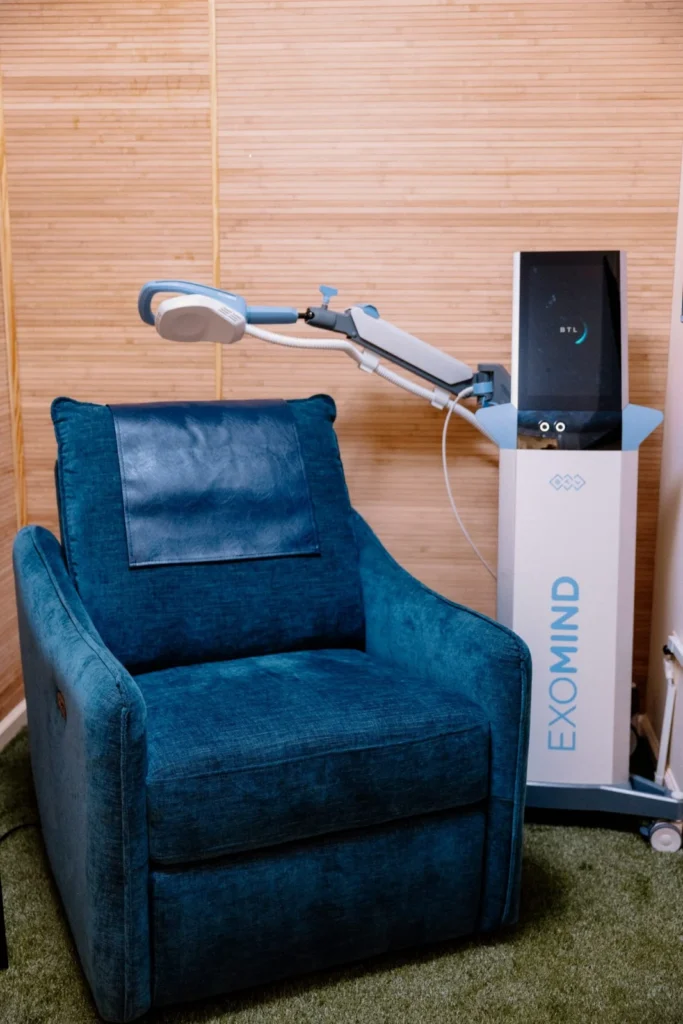
We consider Exomind within the field of repetitive transcranial magnetic stimulation, usually shortened to rTMS. It delivers magnetic pulses through an applicator positioned against the scalp to stimulate brain areas involved in mood regulation.
This magnetic brain stimulation for depression works without surgery or anesthesia. The goal is to reduce depressive symptoms through targeted stimulation. We explain what that means in practical terms, including the treatment schedule, monitoring, and expected follow-up.
Exomind is FDA-cleared for adults with major depressive disorder who have not achieved satisfactory improvement from antidepressant medication during their current episode. A history of incomplete relief may make an assessment worthwhile, but it does not automatically establish candidacy. We consider the specific diagnosis, previous care, and individual safety factors. Treatment can help some patients, but improvement is not guaranteed, and we do not promise a particular result by a particular visit.
4. Start With Thoughtful Screening
We look beyond a single symptom when discussing major depressive disorder treatment. Screening begins with your history, how long symptoms have lasted, and their effect on work, relationships, sleep, and everyday responsibilities.
A questionnaire such as the PHQ-9 can help organize that conversation and track changes. It does not establish a diagnosis by itself. We also need to understand previous treatment responses and any periods of unusually elevated mood or energy with little need for sleep. Those experiences can point toward a different diagnosis and care plan.
Your assessment may also consider sleep problems, medical conditions such as thyroid disorders, and other medications or substances. Testing depends on what your history suggests. We ask directly about suicidal thoughts and immediate safety, too. You can answer honestly without having to make your experience sound better or worse than it feels.
5. Check Safety and Comfort
We review the details that help determine whether magnetic stimulation is appropriate for you. These include seizure history, neurological conditions, current medications, and any implanted metal or electronic devices, especially near the treatment area.
Bring information about implants and a current medication and supplement list. Compatibility depends on the specific device and your circumstances. We explain the relevant considerations before you decide whether to proceed.
During treatment, you may notice tapping sensations on the scalp. Temporary headache or scalp discomfort can occur, and seizure is a rare risk that screening helps us assess. Calling Exomind a drug-free depression treatment describes how the stimulation is delivered.
It does not mean that the treatment has no risks or that you should stop prescribed medication. We want you to understand both the potential benefits and the experience before your first session.
6. Plan for the Appointments
We discuss the practical commitment before treatment begins. A course of magnetic stimulation generally involves repeated appointments, and the prescribed protocol determines session length, frequency, and the number of visits.
You remain awake during treatment. The applicator is positioned for the planned stimulation, and hearing protection is used because the device produces clicking sounds. We check your comfort and explain how to communicate if you need attention during a session.
Ask how much time to reserve for the entire visit, including setup and check-ins. Discuss transportation, work hours, caregiving, costs, and coverage before committing. You may be able to continue usual activities afterward, but we discuss what is appropriate for you.
A manageable schedule matters, particularly when getting out the door already feels like a major task. Knowing what each visit involves can make the process feel less unfamiliar.
7. Track Everyday Progress
We measure progress through symptoms and everyday functioning. A lower questionnaire score is useful information, but so is being able to prepare dinner, answer a friend’s message, or stay engaged during a conversation.
With depression and low energy, changes may be gradual and uneven. Before treatment, choose a few meaningful goals with your care team. These might include a more consistent sleep routine, fewer missed workdays, or renewed interest in something you used to enjoy.
A short weekly note can help us see patterns without turning recovery into another demanding assignment. Record what feels easier, what remains difficult, and any treatment discomfort. We review those observations alongside clinical assessments.
If progress is limited, that information helps guide the next conversation. You do not need to report improvement to be a good patient, and you should tell us promptly about worsening symptoms.
8. Keep Daily Support Realistic
We recognize that advice can feel overwhelming when your energy is already low. Daily support should fit your capacity and work alongside professional treatment.
A regular wake time, manageable movement, meals, and connection with someone supportive may help your overall routine. Start with something small enough to repeat. That might mean a short walk, a simple breakfast, or asking someone to check in before an appointment.
We also encourage you to tell your care team about persistent insomnia or excessive sleepiness. Sleep problems deserve attention within your treatment plan. If family members want to help, specific requests can be easier to act on than “I need support.”
Ask for help with a ride, groceries, or one household task. These supports can reduce the strain of getting through the week while treatment continues.

9. Keep Follow-Up in Place
We view treatment as an ongoing conversation about what is helping. If Exomind becomes part of your care, your prescriber and mental health professional should remain informed about your response and any medication changes.
Follow-up gives us room to discuss whether benefits are lasting and what additional support may be appropriate. Some patients need changes to the wider plan or evaluation by a psychiatric specialist. Other treatments may be considered when symptoms remain severe or persistent.
For some patients, a psychiatrist may discuss options such as esketamine or electroconvulsive therapy, often called ECT. These treatments have their own eligibility criteria and monitoring needs. A specialist can explain which options fit your medical history, needs, and personal preferences.
Before finishing a treatment course, ask when your next assessment should happen and whom to contact if symptoms return. Keeping that information handy can make it easier to ask for help early.
10. Know When to Call 988
We want you to have support between appointments, especially when distress feels difficult to manage. In the United States, call or text 988 for suicidal thoughts or emotional distress. You can also chat at 988lifeline.org.
The 988 Suicide & Crisis Lifeline offers free, confidential support around the clock. You do not have to be suicidal or certain that your situation qualifies as a crisis to reach out. A counselor can listen, assess immediate safety, and help you consider next steps.
If you are in immediate physical danger or experiencing a medical emergency, call 911 or go to the nearest emergency department. If possible, ask someone you trust to stay with you while you connect with help. Outpatient Exomind appointments do not replace urgent crisis care.
Tell Us What’s Still Hard
You do not need to arrive with every answer to ask for depression help in South Georgia. At Quail Ridge Sports Medicine, we can review your treatment history, discuss Exomind candidacy, and consider how it may fit alongside your current care.
Contact us to schedule an assessment. We can help you take a clearer next step in addressing depression, with your daily life and goals guiding the conversation.